


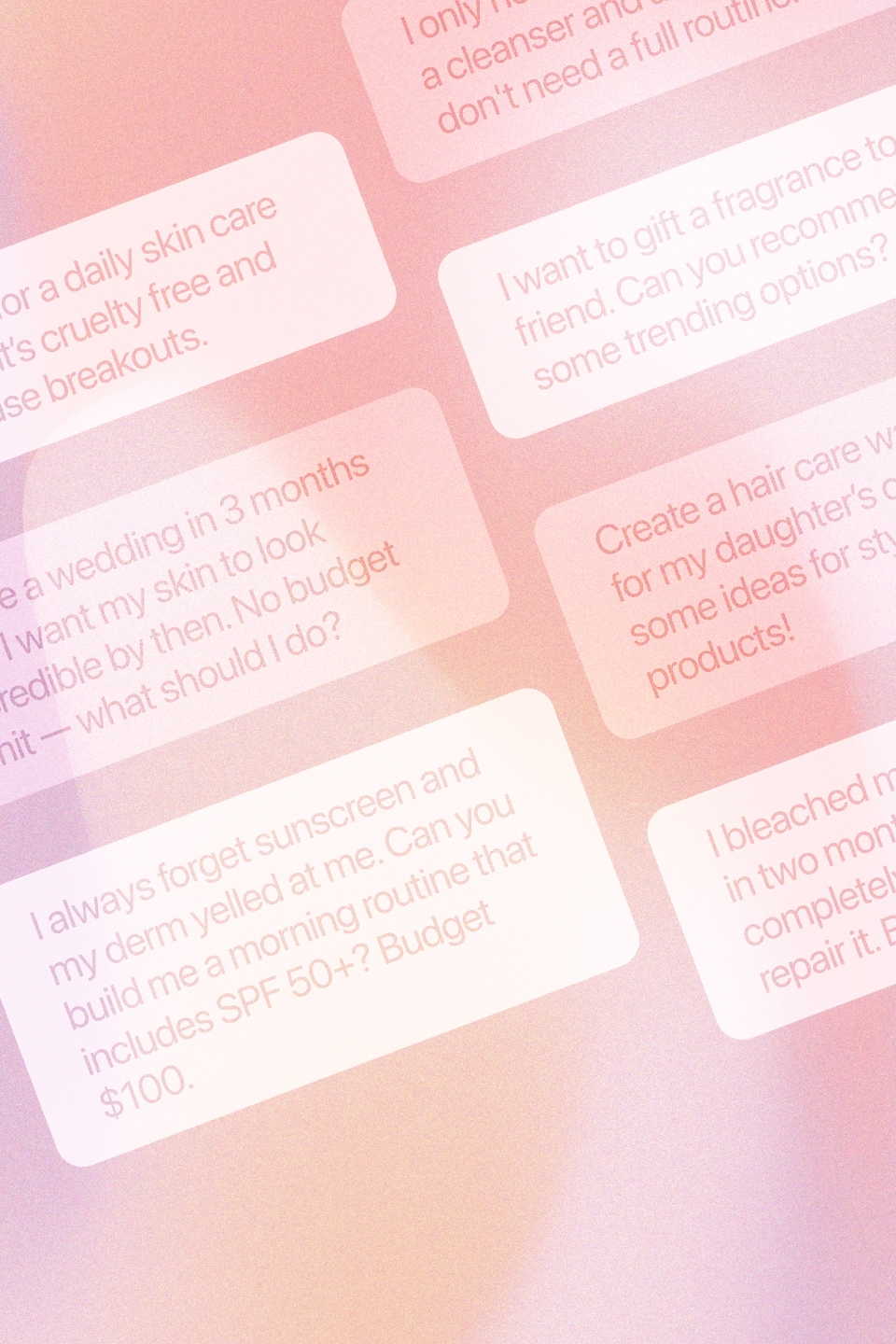
I led product design for an experimental ChatGPT plugin that let users build personalized beauty bundles through natural language, moving product discovery from "What should I search for?" to "What am I trying to achieve?" The core challenge wasn't designing another shopping interface. It was orchestrating a multi-product purchase in a platform we didn't control, where conversation replaced navigation entirely.
The Design Problem
Beauty shopping has inherent complexity. A user might say, "Build me a skincare routine for dry skin under $100," but translating that into a coherent, purchasable bundle requires the system to handle intent interpretation; or translating conversational requests into product curation. It also requires that we ensure that any recommended products work together as a system and cross-platform handoff. Furthermore, preserving confidence and cart integrity when moving from ChatGPT to Ulta.com, and determining what belonged in conversation and what required a visual interface added additional complexity. Traditional e-commerce answers this through established patterns. Conversational commerce has no playbook.
Design Strategy: The Bundle as a Commerce Abstraction
Rather than recreating Ulta.com inside ChatGPT (the instinct every brand team has when it panics about "presence") I approached the plugin as a focused product component with a single job: help users understand, customize, and move forward with their bundle.
This principle guided every decision: Show enough information to make a confident decision. Let Ulta.com be Ulta.com.
This meant product imagery, pricing, and customization controls lived in the ChatGPT interface. Detailed product reviews, shade matching, rewards history, and subscription logic did not. The experience functioned as a landing pad for intent, not a destination for exploration.

